Native Embroidery Design. Southwest File
A Practical Review for Small Business Merchandise & Branded Patches
As an embroidery designer who’s developed hundreds of commercial files for cafes, boutiques, florists, pet brands, and handmade studios, I approached Native Embroidery Design. Southwest File with a clear question: does this tribal geometric pattern translate from aesthetic appeal to real-world business utility? The answer is yes—but with important nuance.
First Impression: Bold, Authentic, and Brand-Ready
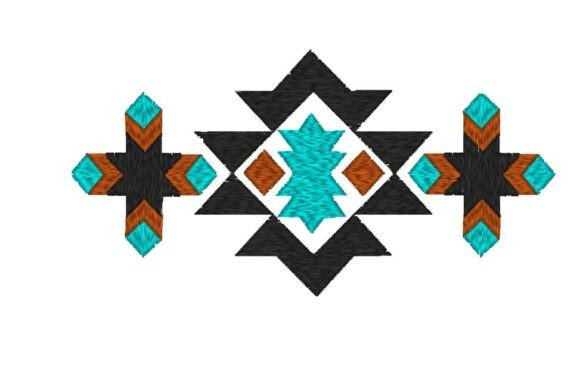
Right away, the title and description signal confidence: “Tribal Geo Pattern Bold geometric tribal embroidery with turquoise and rust tones — perfect for boho, western, or ethnic-inspired designs.” That’s not just decoration—it’s positioning. This isn’t a dainty floral or minimalist monogram. It’s intentionally grounded, earthy, and visually assertive. For small businesses building identity around authenticity—think a desert-themed bakery, a Southwestern apothecary, or a Native-owned craft studio—Native Embroidery Design. Southwest File reads as professional *and* culturally resonant, not costume-y or clichéd. It balances rustic warmth with clean geometry, making it feel handmade yet precise—ideal for brands that value craftsmanship without sacrificing polish.
Where It Shines in Real Business Use
This design excels where small businesses need versatile, scalable branding:
- Embroidered patches: Perfect for sew-on or iron-on application on tote bags, denim jackets, aprons, or staff uniforms. Its bold outlines and balanced negative space hold up beautifully at 2.5"–3.5" sizes.
- Cap embroidery: Works well on structured front panels (especially curved visors) when digitized with appropriate underlay and pull compensation—more on that below.
- Apron embroidery: A strong chest accent or lower-corner detail adds instant character to café, florist, or artisan studio staff wear.
- Tote bag design: Scales elegantly to 4"–5" widths, anchoring hand-printed or woven totes without overwhelming them.
- Product packaging accents: Think embroidered labels on canvas pouches, gift boxes, or reusable produce bags—elevating perceived value of handmade product.
- Event merch & customer gifts: Stands out on limited-run items like festival bandanas, workshop swag, or loyalty program rewards.
For Etsy sellers and creative studios, Native Embroidery Design. Southwest File functions as a ready-made anchor asset—pairing seamlessly with neutral apparel or natural-fiber textiles while reinforcing a cohesive Boho or Southwestern visual language across digital mockups, social posts, and physical goods.
Where to Use It Thoughtfully
Even strong designs have boundaries. Here’s where Native Embroidery Design. Southwest File needs intentional handling:
- Small patch sizes under 2": Fine details may blur. Always test at intended size—especially if using for keychain tags or mini-badges.
- Cap fronts with steep curvature: The geometry holds up well, but avoid placing tight inner corners directly over high-curve zones without digitizing adjustments.
- Textured or loosely woven fabric: Linen, burlap, or heavy canvas require extra stabilizer—and possibly reduced stitch density—to prevent puckering or thread breakage.
- Dark uniforms or black totes: Turquoise and rust thread colors pop on light backgrounds, but verify contrast on dark substrates. Consider reversing thread order or adding a white underlay layer for clarity.
- Frequent washing: High stitch density areas (like tight zigzags or dense fill sections) benefit from quality polyester thread and proper tension calibration—test wash one sample before bulk production.
How It Strengthens Brand Identity & Customer Trust
Consistency builds recognition. When your café aprons, tote bags, and staff caps all feature the same bold, cohesive motif—Native Embroidery Design. Southwest File becomes more than decoration; it’s a silent brand ambassador. Customers subconsciously associate its confident geometry with reliability and intentionality. Unlike generic clipart-style motifs, this design signals attention to cultural context and visual storytelling—deepening trust with audiences who value authenticity. For handmade product sellers, it reinforces the “made with care” narrative without needing words. And because it’s rooted in timeless tribal geometry—not fleeting trends—it supports long-term visual consistency across seasons and product lines.
Essential Embroidery Designer Notes Before Production
Before you load Native Embroidery Design. Southwest File into your machine or send it to a decorator, run through these practical checks:
- Test it in black and white first—does the contrast hold? Does shape legibility survive grayscale?
- Check how it renders at your smallest intended patch size (e.g., 1.75"). Are outlines crisp? Do interior angles stay distinct?
- Review thread color contrast against your target fabric—especially for rust/turquoise combos on off-whites or ecru.
- Inspect spacing between elements—is there enough breathing room to prevent stitching collisions or fabric distortion?
- Confirm hoop size compatibility. Does it fit comfortably within your standard embroidery frame—or will it require re-hooping mid-stitch?
- Test on real fabric with your intended stabilizer combo. A lightweight tear-away may not suffice for dense fills on knits.
- Create a printable mockup for client approval—show it scaled correctly on cap, tote, and apron visuals.
- Compare it beside your other design assets: logo, typography, icons. Does it harmonize—or compete?
- Verify commercial licensing. Since this is a digital embroidery file, confirm usage rights cover small business merch, resale items, and branded patches before mass production.
Remember: a great machine embroidery design isn’t just about beauty—it’s about performance, repeatability, and alignment with your business goals. Native Embroidery Design. Southwest File delivers on all three—if applied with intention. Whether you’re launching your first line of custom apparel or refreshing your boutique’s embroidered product labels, this file offers a rare blend of cultural resonance, visual strength, and commercial flexibility. Just treat it like the strategic asset it is—not just another embroidery file.