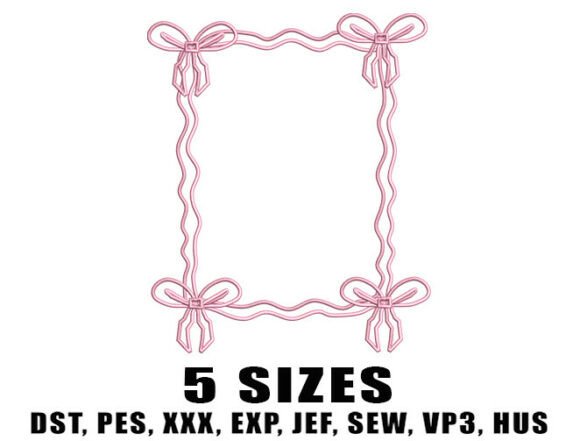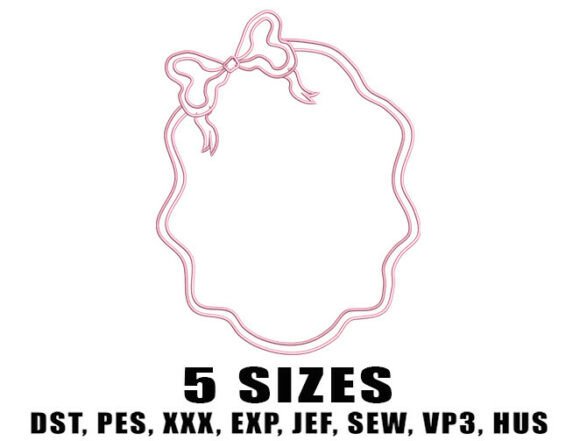
Open Ribbon Frame Embroidery Design
First Impression: Elegant, Soft, and Instantly Recognizable
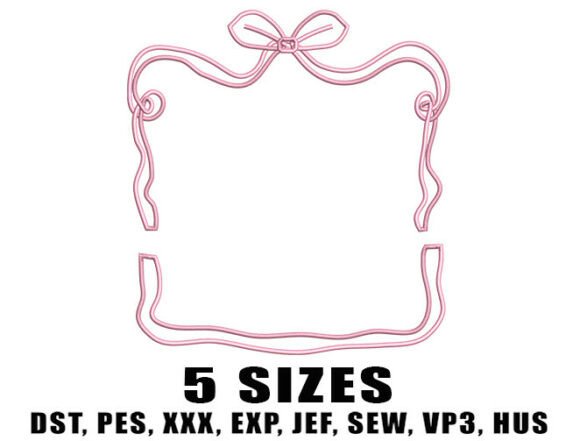
As an embroidery designer who’s prepped over 200 craft fair booths—and shipped thousands of embroidered pieces to Etsy sellers and boutique makers—I opened the Open Ribbon Frame Embroidery Design file expecting charm. What I got was something sharper: quiet confidence. It reads as elegant but approachable, with clean lines and intentional negative space—no fuss, no clutter. The “open square frame” suggests modern minimalism; the “flowing ribbon and bow” adds softness and movement. This isn’t rustic or farmhouse—it’s nursery-adjacent without being cutesy, sophisticated without feeling cold. At a glance, it signals handmade quality and thoughtful design—not mass-produced filler.
Where It Shines: Craft Fair Products That Sell
In my booth setup—tote bags stacked upright, aprons draped over wooden crates, tea towels folded beside embroidered pillow covers—the Open Ribbon Frame Embroidery Design stood out strongest on three items: gift tags, place cards, and small fabric pouches. Why? Because it’s designed for intentionality. Customers don’t just see “a bow”—they see a moment: a baby shower favor, a wedding welcome station, a boutique’s branded gift wrap. On a linen tote bag (centered low near the hem), it reads as refined. On a cotton apron pocket? Polished but personal. As a standalone embroidered patch? Highly collectible—especially in the full set of five sizes.
It performs beautifully on smooth, medium-weight fabrics: quilting cotton, linen-cotton blends, lightweight denim, and stable twills. On textured tea towels? Use Size 3 (5.8") or larger—smaller versions risk losing ribbon flow against loops and pile. On curved cap surfaces? Not ideal unless resized and re-digitized for curve compensation—stick to flat applications like patches or front-panel embroidery on structured caps.
Photography & Online Appeal: A Digital Seller’s Secret Weapon
This design is made for Etsy listings and printable mockups. Its open frame creates natural breathing room around text or monograms—meaning you can drop in names, dates, or tiny icons without crowding. That versatility translates directly to higher conversion: shoppers imagine *their* use case instantly. In natural light, the ribbon’s gentle curves catch highlights beautifully—no harsh shadows, no stitch bleed. For digital sellers, that means fewer editing passes and faster listing turnaround. Pair it with neutral backdrops and muted thread colors (ivory, heather grey, sage) and it reads premium—even on budget-friendly fabric.
Production Reality Check: Smart Sizing, Smart Stitching
The five size options—3.8", 4.8", 5.8", 6.8", and one unlisted (likely 2.8" or 7.8")—are its biggest strength *and* its biggest trap. Smaller sizes (under 4") demand careful attention: check for dense stitch areas where the ribbon meets the bow—if digitized tightly, those zones may pucker on lightweight fabrics or require extra stabilizer. On dark fabric, confirm thread contrast: pale pastels vanish unless paired with matte white or ecru underlay. And yes—always test on scrap fabric matching your final product’s weight and texture. A tea towel’s nap will mute fine details; a stiff canvas pouch may distort the open frame’s proportions.
Practical Designer Notes Before You Stitch
- Test before batch production—run one piece on your exact fabric + stabilizer combo
- Review spacing—ensure the open center leaves room for optional personalization
- Confirm hoop size compatibility—larger versions may require 6x10" or bigger hoops
- Inspect stitch density—especially where ribbon loops overlap; high density = stiffness
- Use cutaway or tear-away stabilizer based on fabric stability—not generic defaults
- Create at least one real mockup (not just digital)—see how it drapes, folds, and catches light
- Compare thread colors across fabric swatches—same thread looks different on oatmeal vs. charcoal
- Verify commercial licensing before selling finished products—this is a digital embroidery file, not public domain
Booth Impact & Buyer Engagement
At a crowded craft fair, attention lasts 3 seconds. The Open Ribbon Frame Embroidery Design wins that window—not with loudness, but with clarity. Its symmetry invites the eye; its openness feels generous, not empty. When stitched on a set of matching gift tags beside a stack of handmade soaps or organic baby blankets, it quietly says, “This is curated.” That perception lifts perceived value—shoppers pay more for cohesion, not just cuteness. For small shop owners building brand consistency, this design works as a visual anchor: same frame, shifting ribbons (thread color swaps), evolving uses (tags → labels → pillow corners). It’s repeatable without feeling repetitive.
Final Verdict: A High-Return, Low-Risk Embroidery File
This isn’t a trend-chasing design—it’s a foundation piece. The Open Ribbon Frame Embroidery Design delivers across nursery-themed collections, gender-neutral baby goods, wedding stationery accessories, and elevated everyday handmade products. It scales gracefully from delicate place card accents to bold tote bag statements. For Etsy sellers juggling SEO, mockups, and shipping deadlines—it’s efficient. For craft fair vendors needing instant booth polish—it’s reliable. And for embroidery business owners investing in design assets that convert? It’s one of those rare machine embroidery designs that feels both timeless and timely.
If you’re adding to your embroidery file library this season: prioritize this. Then stitch it, photograph it, price it thoughtfully—and watch customers reach for the item with the ribbon that *breathes*.