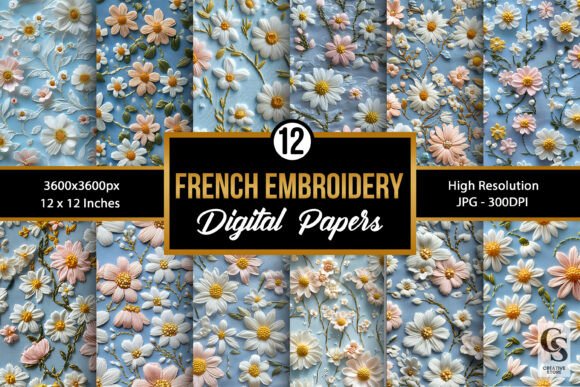
French Daisy Embroidery Seamless Pattern
A Designer’s First Glance: Light, Airy, and Quietly Confident
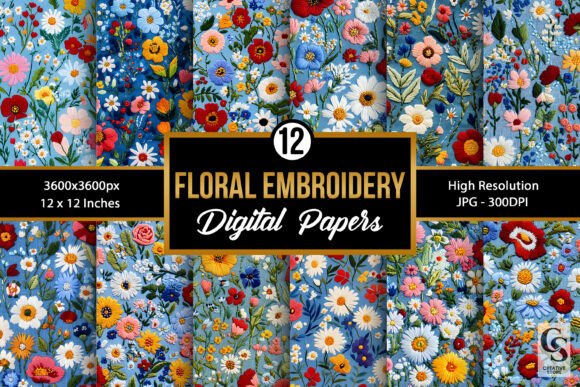
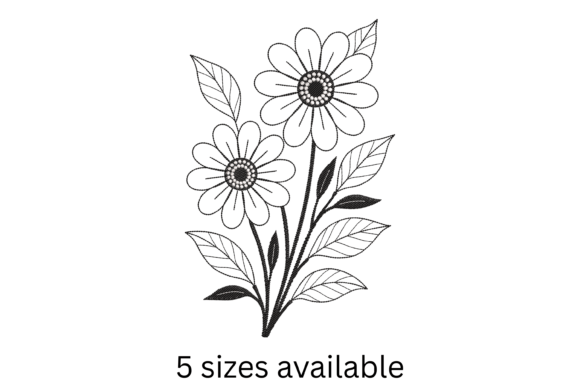
When I opened the French Daisy Embroidery Seamless Pattern zip file, what struck me first wasn’t technical precision—it was mood. Twelve high-resolution JPGs (3600 x 3600 pixels, 12″ x 12″ at 300dpi) radiate softness without sacrificing structure. The daisies aren’t fussy or overly stylized; they’re gentle, botanical, and evenly spaced—just enough repetition to feel cohesive, just enough variation to avoid monotony. This isn’t a bold statement pattern. It’s the kind of design that whispers “handmade care” before the first stitch hits fabric.
Real-World Test: A Custom Linen Tote for a Local Boutique
I used French Daisy Embroidery Seamless Pattern on a natural linen tote—intended as a limited-run gift with purchase for a small-town apothecary. No dense fill stitches, no metallic thread, no sharp corners to snag. Just clean outlines and open negative space between blooms. What surprised me was how well it translated from screen to stitched result: the seamless repeat meant no visible joins across the 10″ x 10″ embroidery area, and the scale held up beautifully at both 6″ and 9″ hoop sizes. Customers commented not just on the floral motif—but on how “thoughtful” and “unhurried” it felt. That’s the quiet power of intentional pattern rhythm.
Where It Shines (and Where It Asks for Care)
French Daisy Embroidery Seamless Pattern excels in projects where breathability and tactility matter:
- Custom apparel: Works especially well on lightweight sweatshirts, cotton tees, and woven baby onesies—its open layout avoids bulk and stiffness.
- Home & kitchen goods: Perfect for tea towels, pillow covers, and aprons where frequent washing is expected; low stitch density means less thread wear over time.
- Personalized gifts: Layered subtly behind monogrammed initials or stitched alone as a border on nursery blankets—it adds warmth without overwhelming.
- Etsy & boutique branding: Looks polished in printable mockups and digital previews; pairs cleanly with serif fonts and neutral palettes for cohesive shop visuals.
That said, it’s not universally forgiving. On stretchy knits (like ribbed baby caps), I recommend testing with light cutaway stabilizer—not just tear-away—to prevent puckering around petal edges. And while the design reads clearly on light fabrics, I’d avoid placing it directly over seams or curved surfaces (think baseball caps or contoured pillow inserts) without adjusting placement to maintain visual flow.
Stitching Clarity Meets Customer Trust
As a designer who ships embroidered goods directly to customers, I pay close attention to how a pattern affects perceived value. French Daisy Embroidery Seamless Pattern delivers clarity without complexity—no tiny stems lost in satin stitch, no fragile details that vanish after two washes. That builds trust. When someone sees consistent, even spacing and balanced negative space, they don’t just see a flower—they see intention. That translates to fewer returns, more repeat buyers, and stronger word-of-mouth for craft businesses.
It also supports brand consistency. Whether you’re stitching 50 matching aprons for a café launch or 12 holiday tea towels for your Etsy shop, this pattern holds its character across batches. No unexpected color shifts in fill areas. No jagged repeats that break immersion. Just reliable, repeatable elegance.
Practical Notes Every Embroiderer Should Keep Handy
Before committing French Daisy Embroidery Seamless Pattern to your next project, here’s what I do—and recommend you do too:
- Test on scrap fabric first, especially if using textured weaves (burlap, heavy canvas) or dark backgrounds—check how thread colors pop against the base.
- Review stitch density visually—not just in software, but by zooming into the JPGs. Look for tight clusters that might cause fabric distortion or excessive thread buildup.
- Confirm hoop size compatibility. While the 12″ x 12″ dimensions give flexibility, your machine’s maximum embroidery area may require cropping or tiling—plan accordingly.
- Inspect small details at 200% zoom: Petal tips, stem junctions, and curve smoothness all affect final polish. If fine lines blur or merge in the JPG preview, they’ll likely lose definition when stitched.
- Try black-and-white mockups. A design that reads strongly in grayscale will hold up across diverse thread palettes and fabric tones.
- Use appropriate stabilizer. For lightweight linens or silks: medium-weight tear-away. For knits or unstable weaves: light cutaway + topping for surface smoothness.
- Verify licensing terms before selling finished items or bundling French Daisy Embroidery Seamless Pattern into digital product kits—this is critical for Etsy sellers and digital designers.
Final Thought: Not Just a Pattern—A Design Decision
French Daisy Embroidery Seamless Pattern doesn’t shout. It settles in. It suits slow-stitching moments and thoughtful gifting alike. It fits seamlessly into a craft business that values authenticity over flash, durability over trend-chasing, and quiet beauty over visual noise. Whether you’re prepping for a farmers’ market stall, building a cohesive line of nursery decor, or designing embroidery files for other makers, this pattern earns its place—not because it’s flashy, but because it’s trustworthy, adaptable, and deeply rooted in real-world making.
If your work leans into handmade warmth, botanical simplicity, or timeless charm, French Daisy Embroidery Seamless Pattern isn’t just another download. It’s a design partner—one that shows up ready to translate your vision into something tactile, memorable, and quietly lovely.