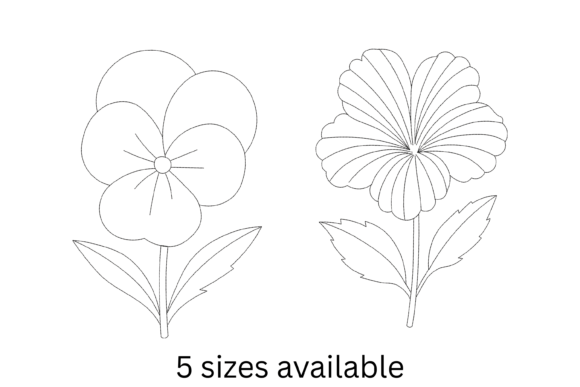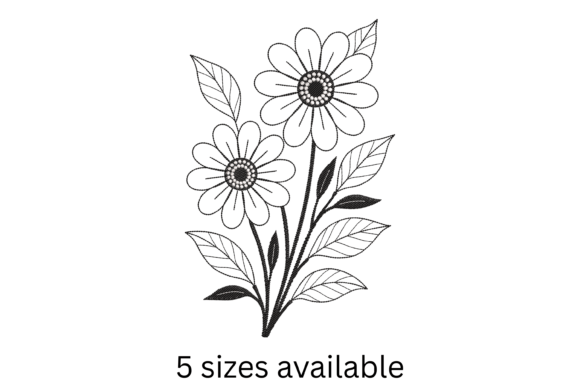
Daisy Outline Embroidery Design
First Impression: Minimal, Elegant, and Instantly Recognizable
As an embroidery designer who’s prepped over 200 craft fair booths, I can tell you—Daisy Outline Embroidery Design lands with quiet confidence. It’s not loud or overly detailed; it’s a clean, single-line floral silhouette that reads as elegant, minimal, and quietly timeless. No frills, no filler—just the essential shape of a daisy, perfectly balanced for machine embroidery. That makes it ideal for makers who want handmade quality without visual clutter. Customers at craft fairs don’t pause for complexity—they pause for clarity. And this design delivers.
Where It Shines: Craft Fair Products That Sell
This machine embroidery design isn’t just versatile—it’s strategic. On a natural canvas tote bag? It anchors the front corner with effortless charm. On a linen apron? It sits beautifully above the pocket, adding artisanal polish without overwhelming utility. For tea towel embroidery, its open-outline structure avoids stiffness—no heavy stitch density to compromise absorbency or drape. And on small-format items like embroidered patches or fabric pouches? It scales down cleanly, holding definition even at 2.5 inches wide.
It also works exceptionally well for booth samples: stitch it onto a neutral pillow cover beside a matching market bag, and suddenly your display feels curated—not chaotic. As a handmade product detail, it signals intentionality. Buyers associate clean outlines with premium craftsmanship, especially when paired with quality fabrics like organic cotton, heavyweight linen, or brushed twill.
Photography & Online Appeal: A Digital Seller’s Secret Weapon
If you’re an Etsy seller or small shop owner building listings, Daisy Outline Embroidery Design is a gift. Its simplicity translates flawlessly in photos—no lost details in shadows, no thread blending issues under lighting. Use it in a printable mockup with soft natural light, and it reads instantly across devices. Unlike dense floral motifs, this outline doesn’t require heavy editing to pop. That means faster listing prep, stronger thumbnails, and higher click-through rates.
It’s also highly repeatable for batch production. Whether you’re stitching 12 tote bags or 50 patches, consistency stays high—no tricky satin stitches or nested fills to cause tension hiccups. That reliability cuts down on re-hooping, thread breaks, and post-embroidery trimming time. For commercial embroidery runs, that’s margin—and peace of mind.
Careful-Use Notes: Where Clarity Meets Craftsmanship
That said—don’t assume it’s foolproof. As a working embroidery designer, I always test first. Here’s what to watch:
- Fabric texture matters. On heavily textured tea towels or terry cloth, the outline may soften visually—consider slightly increasing stitch width (if your software allows) or using tear-away + cutaway stabilizer combo.
- Curved surfaces demand attention. If stitching on caps or curved pouches, verify hoop compatibility and use adhesive stabilizer to prevent shifting—thin outlines show misalignment instantly.
- Dark fabric needs contrast. This design relies on line definition. On navy, charcoal, or black fabric, use bright white, ecru, or metallic thread—not off-white—to preserve legibility.
- Small sizes need verification. Below 1.75 inches, check whether petal tips or center lines remain distinct. Some machines struggle with fine vector-based endpoints—always run a test on scrap before committing.
Booth Impact & Buyer Engagement
In person, Daisy Outline Embroidery Design stands out because it doesn’t shout—it invites. At a crowded craft fair, bold graphics compete; subtle elegance draws people in for a closer look. I’ve watched shoppers pause, tilt their heads, then ask, “Is that hand-stitched?” Even though it’s machine-made, the precision reads as intentional, human-made. That perception lifts perceived value—and price point.
It also supports brand consistency. Whether you’re selling botanical-themed goods or minimalist home wares, this design acts as a unifying motif—like a signature stamp across your small shop product range. Pair it with consistent thread colors (think oatmeal + sage, or cream + terracotta), and your booth tells a cohesive story without words.
Designer-to-Designer Production Checklist
Before cutting fabric or loading hoops, here’s my non-negotiable list—refined from years of craft fair prep:
- Test the digital embroidery file on scrap fabric matching your final product (e.g., canvas for totes, terry for towels).
- Check thread contrast—not just color, but sheen and thickness. Matte cotton vs. glossy polyester changes how the outline reads.
- Review spacing between elements. Is there enough breathing room near edges or seams? Adjust placement before hooping.
- Confirm hoop size compatibility—especially for curved items like caps or pouches where space is tight.
- Inspect stitch density. Even outlines can over-stitch at junctions—zoom in on your embroidery software to spot overlapping commands.
- Choose stabilizer intentionally: lightweight cutaway for stable fabrics, fusible + tear-away for knits or delicate linens.
- Create at least one real-world mockup—not digital only. See how it drapes, folds, and catches light.
- Compare across 3–4 fabric colors. A design that sings on ivory may vanish on heather gray.
- Verify commercial licensing status. Since this is a digital embroidery file, confirm whether resale of finished products is permitted before launching your craft fair product line.
Final Thought: Less Is Truly More
In a market flooded with busy patterns and over-designed assets, Daisy Outline Embroidery Design is a breath of fresh air—and a smart business decision. It fits seamlessly into the Single Flowers category while standing apart through restraint. It elevates a basic tote into a giftable handmade product, turns an apron into a keepsake, and gives your booth visual calm amid the craft fair buzz. For embroidery business owners, Etsy sellers, and boutique makers alike: this isn’t just another embroidery file. It’s a quiet differentiator—with serious selling power.