Papa Love Embroidery: A Designer’s Real-World Review
First Impressions: Bold, Warm, and Instantly Recognizable
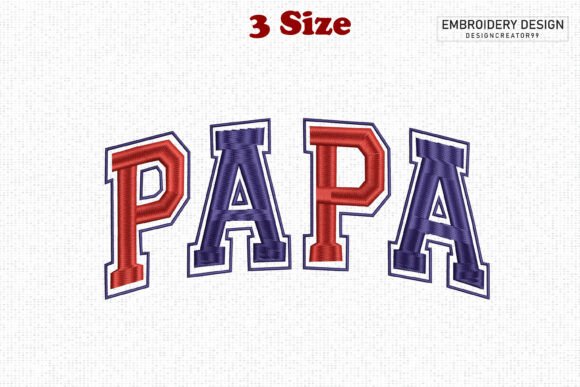
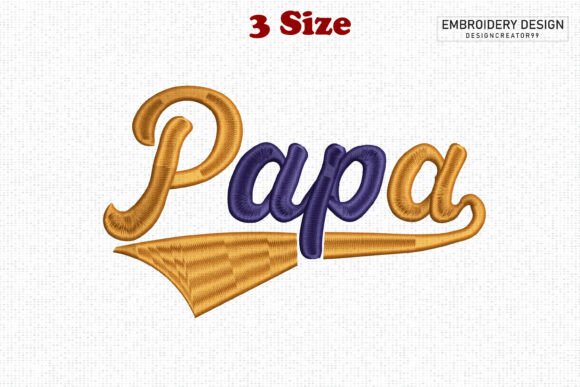
Opening the Papa Love Embroidery file, I immediately felt that familiar spark — the kind that says, “This one will land well with customers.” It’s not fussy or overly detailed. Instead, it leans into confident, sporty energy with bold varsity-style lettering and a playful, affectionate tilt — think classic letterman jacket meets Sunday morning coffee with Dad. The layout is clean and centered, with balanced negative space around the word “Papa,” making it easy to scale and position. There’s no clipart clutter, no distracting icons or cartoonish extras. Just strong, legible letterforms that carry warmth without sacrificing structure. That simplicity is its biggest strength — especially when you’re stitching for real people who want sincerity over spectacle.
A Tote Bag Test: Where Papa Love Embroidery Really Shines
Last week, I stitched Papa Love Embroidery onto a natural canvas tote for a local boutique’s Father’s Day pop-up. We used medium-weight tear-away stabilizer and 40-weight polyester thread in navy and cream. On the finished bag, the design read clearly from six feet away — crisp edges, consistent satin stitch coverage on the letters, and zero puckering. Customers paused. Smiled. Said things like, “That’s *exactly* how my husband signs birthday cards.” That reaction tells me Papa Love Embroidery works as both a visual anchor and an emotional cue — not just decoration, but connection. It performed especially well on the slightly textured surface of the canvas, holding definition where finer script designs might blur.
Where It Fits Naturally (and Where It Doesn’t)
Papa Love Embroidery excels on:
- Custom apparel — sweatshirts, crewnecks, and structured tees where bold lettering reads well at arm’s length
- Embroidered patch — the clean lines translate beautifully to sew-on or iron-on versions for caps, backpacks, or denim jackets
- Tote bag design — large-scale visibility, minimal hoop repositioning needed
- Aprons and kitchen towels — friendly but professional enough for small shop merchandise or wedding weekend gifts
- Baby embroidery — when scaled down thoughtfully (more on that below), it adds charm to onesies or burp cloths without overwhelming delicate fabric
It’s less ideal for:
- Curved surfaces like baseball caps — unless you’ve confirmed the file includes cap-specific digitizing (e.g., reduced density in the crown curve). Varsity-style lettering can distort if not optimized.
- Thin or highly stretchy fabric — like lightweight knits or jersey — without proper cut-away stabilizer and careful hooping.
- Dense decorative accents — this isn’t a filler motif. Trying to layer it with florals or borders risks visual competition.
- Very small hoop sizes under 4x4 inches — scaling down too far compromises legibility, especially in the inner curves of the “P” and “A.”
Design Integrity in Real Use: Clarity, Trust, and Craft Value
What sets Papa Love Embroidery apart isn’t novelty — it’s reliability. As a designer reviewing embroidery files for client work and my own craft business, I look for consistency across fabric types and thread choices. This design holds up. The stitch density feels intentional — not so heavy that it stiffens a baby onesie, not so light that it fades after three washes on a tea towel. On dark fabric, it pops cleanly with standard thread contrast; on light, it reads warmly without needing metallic or specialty threads. That predictability builds trust — both with your customers (“Yes, this will look like the mockup”) and with your machine (“No unexpected jumps or trims”).
For Etsy sellers and small shop owners, that consistency directly supports brand clarity. When every Papa Love Embroidery piece — whether on a pillow cover or a holiday gift set — looks professionally finished, your shop gains cohesion. Buyers recognize your attention to detail before they even read your description.
Practical Designer Notes Before You Stitch
Before committing to a production run or listing Papa Love Embroidery as part of a digital product bundle, here’s what I always do:
- Test on scrap fabric first — especially if using textured, dark, or stretchy materials. Note how the satin stitch wraps corners and whether fill areas settle evenly.
- Review stitch density — compare it against similar varsity-style files you’ve used. Overly dense fills can cause stiffness; too sparse loses impact.
- Confirm hoop size compatibility — check the largest dimension in the file. If you’re working with a 5x7 hoop but the design pushes 6.8 inches wide, you’ll need to resize or rehoop.
- Inspect small details — zoom in on the inner counters of letters. Are they open? Clean? Or prone to nesting or thread breaks?
- Test black-and-white mockups — this reveals contrast issues faster than stitching. Does “Papa” disappear on heather gray?
- Use proper stabilizer — medium tear-away for stable wovens, cut-away for knits, and soft tear-away for baby items.
- Verify licensing — since Papa Love Embroidery is marketed for personalized gifts and Father’s Day projects, confirm whether commercial use (e.g., selling embroidered totes on Etsy) is permitted under the terms provided with the file.
Final Thought: A Workhorse Design With Heart
Papa Love Embroidery won’t win awards for avant-garde digitizing — and it doesn’t need to. It’s a grounded, versatile, emotionally resonant machine embroidery design built for real use: quick turnaround, repeatable results, and genuine customer resonance. Whether you’re an embroidery designer prepping assets for a digital shop, a craft business owner stitching Father’s Day bundles, or a hobbyist personalizing a gift, this file delivers quiet confidence — not flash, but function with feeling. It reminds me why I love this work: sometimes the strongest statement is a single, well-stitched word — warm, clear, and unmistakably human.