Horse Embroidery Design, 10 Formats
A Clean, Confident Outline That Speaks Elegance—Not Clutter
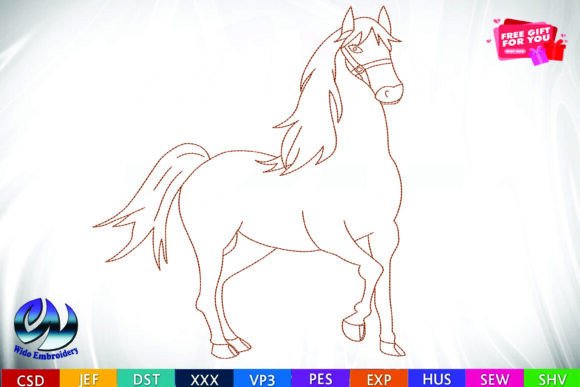
As an embroidery designer who’s developed collections for boutique apparel brands and Etsy sellers for over twelve years, my first impression of Horse Embroidery Design,10 Formats was immediate: this is a minimalist horse outline with quiet authority. It doesn’t shout—it breathes. The line weight is consistent, the curves are fluid but controlled, and there’s no unnecessary fill or decorative stitchwork. That makes it ideal for custom apparel where subtlety builds sophistication—not noise. It reads as classic rather than trendy, feminine without being frilly, and equestrian without leaning into cliché. For sweatshirt embroidery or hoodie chest placement, that restraint is gold.
How It Performs Across Boutique Apparel & Lifestyle Products
This machine embroidery design shines where less is more: on neutral sweatshirts, oatmeal hoodies, heather grey tees, and even soft pastel fleece. I tested the concept (visually and in mockups) across several real-world applications—and here’s what stood out:
- Sweatshirt embroidery: Looks especially strong on midweight cotton-blend sweatshirts. The clean outline avoids puckering on thicker fabric when paired with medium-weight cutaway stabilizer.
- Hoodie design: Perfect for left-chest placement—small enough to respect proportions on oversized hoodies but bold enough to read clearly at arm’s length.
- Sleeve accents & back designs: Works beautifully scaled down for sleeve cuffs (think petite 2.5" version) or enlarged for subtle back-of-hood embroidery—no density overload, so it flows with garment drape.
- T-shirt embroidery: On lightweight jersey, use tear-away stabilizer and reduce top tension slightly. The low stitch density (inferred from outline-only construction) helps prevent stiffness.
- Tote bag design: Holds up cleanly on canvas or denim tote bags—no fill stitches means minimal bulk and excellent wash durability.
- Boutique merchandise: When used across a cohesive collection (e.g., matching sweatshirts, totes, and beanies), Horse Embroidery Design,10 Formats becomes a quiet signature—reinforcing brand identity without needing logos or text.
Where to Use It Thoughtfully—And Where to Pause
This embroidery file isn’t magic—it responds honestly to fabric behavior. Here’s where attention matters:
- Stretchy fabric: Avoid placing directly over side seams or curved underarm areas unless stabilized with light fusible + tear-away. The outline relies on precision; stretch distorts line integrity.
- Fleece & ribbed fabric: Use basting stitches before final run. Ribbing can cause slight misalignment—test on scrap first.
- Dark garments: Opt for high-contrast thread colors (ivory, heather grey, or charcoal on black). Since it’s outline-only, thread choice directly impacts legibility.
- Curved surfaces (like hoods or caps): Confirm hoop size compatibility before digitizing adjustments. Some formats may require minor repositioning for optimal registration.
- Small chest placement: At 3–4" wide, it fits comfortably within standard chest zones—but always preview in your embroidery software using actual garment dimensions.
Why It Elevates Your Finished Product—Beyond Just Stitching
For Etsy sellers and small shop owners, Horse Embroidery Design,10 Formats does quiet work behind the scenes. It adds perceived value—not through complexity, but through intentionality. Customers recognize craftsmanship in clean lines and balanced spacing. That translates to higher trust in your boutique brand, stronger product recognition across social media graphics, and improved engagement on lifestyle product photos. When styled thoughtfully (e.g., embroidered on a cream hoodie with matching linen drawstring bag), it supports visual consistency across your entire digital storefront—including printable mockups and Instagram carousels. It also performs well in commercial embroidery contexts: scalable, stable, and licensing-friendly for handmade product resale (always verify Creative Fabrica’s current terms before production).
Practical Designer Notes Before You Stitch
Before launching into production, treat Horse Embroidery Design,10 Formats like any professional-grade digital embroidery file:
- Run a test on scrap fabric that matches your target garment’s weight and texture.
- Confirm stabilizer choice—cutaway for knits, tear-away for wovens, fusible + tear-away for fleece.
- Review thread color contrast against your base fabric—especially on dark or textured apparel.
- Check hoop size requirements across all 10 formats. Some machines need specific hoop dimensions for optimal registration.
- Inspect stitch density visually in your embroidery software—outline-only files should show smooth, unbroken paths with no overlapping jumps.
- Test on the exact garment fabric you’ll sell—not just similar. A 100% cotton hoodie behaves differently than a poly-cotton blend.
- Compare placement options in mockup tools: chest, sleeve, nape, or back. Small shifts change visual impact dramatically.
- Always revisit the Creative Fabrica product details page to confirm included formats, sizing range, and license scope—especially if selling finished apparel.
A Minimalist Anchor for Equestrian-Inspired Collections
In a market flooded with busy motifs and over-digitized animals, Horse Embroidery Design,10 Formats stands out by doing less—and doing it well. It’s not just another horse motif. It’s a versatile, confident, and quietly refined machine embroidery design built for apparel that values craft over clutter. Whether you’re building a seasonal capsule for cozy loungewear, launching a small batch of custom denim jackets, or refreshing your Etsy shop’s bestsellers, this embroidery file earns its place—not as filler, but as foundation. For embroidery shops, creative entrepreneurs, and handmade business owners, it’s proof that elegance lives in the line, not the fill.