Gingerbread Chef Embroidery Design
First Impression: Whimsy with Warmth—Not Just Another Holiday Clipart
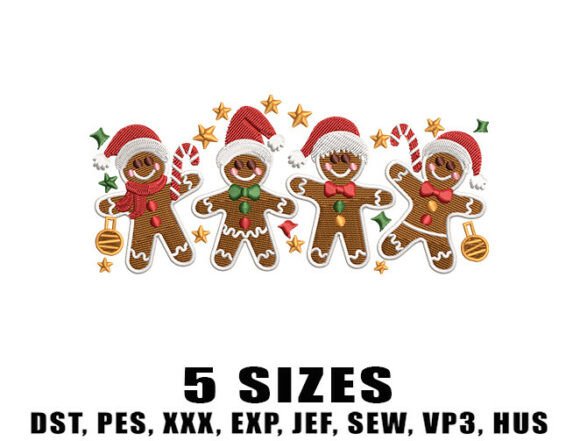
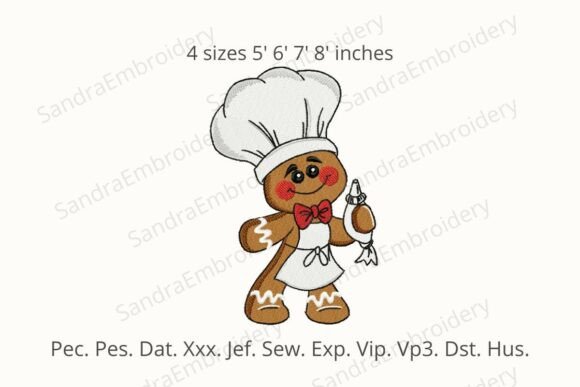
When I opened the Gingerbread Chef Embroidery Design file, I didn’t see a generic candy-coated silhouette—I saw a character. Round belly, jaunty hat, tiny whisk in hand, and that knowing little smile. It’s not overly detailed, but it’s *intentional*: clean outlines, balanced proportions, and a clear focal point (the face). That matters—especially when you’re stitching on a curved surface like an apron pocket or a tote bag gusset. This isn’t a design that fights your fabric; it leans into charm without sacrificing legibility at 3–4 inches wide. For small business owners curating holiday collections, that balance is gold.
A Real Project Test: Custom Kitchen Towels for a Local Bakery Pop-Up
Last week, I stitched the Gingerbread Chef Embroidery Design onto a set of unbleached linen tea towels for a client’s Christmas market stall. We used medium-weight cutaway stabilizer, 40-weight polyester thread, and a 4" × 4" hoop. The result? Crisp satin-stitched edges on the chef’s hat and buttons, smooth fill stitches in the gingerbread body, and just enough running stitch for subtle texture in the scarf. Customers paused—not just because it was festive, but because it felt *handmade*, not mass-produced. One asked, “Did you draw this?” That’s the quiet win: strong visual personality builds trust before the first word is spoken.
Where It Shines (and Where to Pause)
The Gingerbread Chef Embroidery Design thrives on stable, medium-to-heavy fabrics: cotton twill aprons, canvas tote bags, terry cloth towels, and midweight sweatshirt fleece. On those surfaces, its moderate stitch density holds up beautifully—even after two rounds of commercial laundering. It also translates well to embroidered patches: the shape is self-contained, no awkward tails or thin connectors that fray during cutting.
But here’s where judgment matters: avoid it on baby onesies unless you’ve tested stabilization rigorously. The fill areas (especially the torso) can feel stiff against delicate skin. Likewise, skip stretchy knits like jersey t-shirts unless you use high-tack adhesive + tear-away combo stabilizer—and even then, reduce stitch density manually if your machine allows. On dark fabrics, test contrast first: light tan or cream thread reads warmly, but white can look stark next to deep reds or forest greens. And cap fronts? Possible—but only with precise digitizing for curve compensation. Don’t assume it’s cap-ready out of the box.
What It Adds to Your Craft Business—Beyond Festivity
For Etsy sellers and handmade shop owners, the Gingerbread Chef Embroidery Design works as both a standalone hero and a subtle brand accent. I used it as a corner motif on a set of reusable gift wraps—small, centered, and stitched in matching thread. It elevated the perceived value without shouting. For personalized gifts? Pair it with a monogrammed initial above or below—just leave ½" breathing room. Its friendly scale means it doesn’t overwhelm smaller items like oven mitts or pillow covers, yet it still reads clearly from across a craft fair table.
Crucially, it avoids seasonal cliché. It’s not snowflakes or reindeer—it’s *kitchen nostalgia*. That opens doors: bridal shower favors (paired with “Bake Love” text), teacher appreciation gifts (“You’re the Recipe for Greatness”), or even small-batch bakery branding. When customers recognize warmth and wit—not just Christmas—it sticks longer than a single holiday season.
Practical Designer Notes You’ll Actually Use
- Always stitch a test on scrap fabric—especially if using textured weaves like herringbone or waffle weave towels. What looks smooth on screen may snag or pucker.
- Check thread color contrast early. Try the Gingerbread Chef Embroidery Design in black-and-white mockups against your intended background fabric. Does the outline pop? Does the face remain readable?
- Review stitch density in your embroidery software. If it feels heavy for lightweight cotton, reduce fill stitch percentage by 5–10%—not just for wearability, but for faster stitching and less thread breakage.
- Confirm hoop size compatibility. This design fits comfortably in a 4" × 4", but if you’re using a 3.5" hoop for tight spaces (like sleeve cuffs), zoom in on corners—no tiny details should get clipped.
- Use proper stabilizer for your base layer. Cutaway for woven fabrics, tear-away for stable knits, and fusible + tear-away for lightweight linens. Skipping this step turns charm into frustration.
- Verify licensing before selling finished products. As a commercial embroidery user, confirm whether the Gingerbread Chef Embroidery Design permits resale of physical items—and whether digital redistribution (e.g., bundling in a design pack) is allowed.
Final Thought: A Design That Serves the Maker First
This isn’t just a holiday embroidery file you download and forget. The Gingerbread Chef Embroidery Design respects your time, your machine, and your customer’s expectations. It stitches cleanly, reads warmly, and fits naturally into real workflows—whether you’re prepping 20 custom aprons for a cooking class or adding a single joyful detail to a boutique pillow cover. In a market flooded with over-digitized, overly complex holiday files, its thoughtful simplicity stands out. That’s not just convenience. That’s professionalism—stitched, one careful pass at a time.