Faux Embroidery Patchwork Christmas Tree
First Impression: Festive, Textured, and Instantly Recognizable
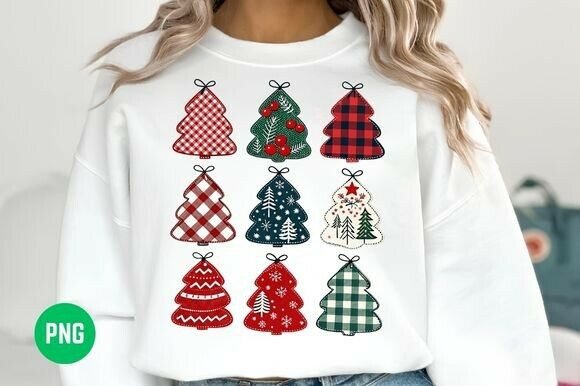
As an embroidery designer who’s prepped over 200 craft fair booths—from snowy Vermont markets to sun-drenched California pop-ups—I opened the Faux Embroidery Patchwork Christmas Tree file with one question: “Will this stop someone mid-aisle?” The answer is yes. At first glance, it reads as warm, handmade, and intentionally imperfect—like a vintage quilt block stitched with care. It’s not sleek or minimalist; it’s *festive texture* made visual. The “faux embroidery” cue in the title sets accurate expectations: this isn’t a photorealistic stitch map, but a clever graphic that *evokes* hand-stitched charm through layered shapes, subtle seams, and cozy patchwork geometry. That’s gold for holiday shoppers seeking authenticity without the $45 price tag.
Where It Shines on Craft Fair Products
This design thrives where handmade warmth meets functional gifting—and that’s exactly what fills my booth each December. On a natural linen tote bag? Stunning. The patchwork tree reads clearly at 6–8 inches wide, balancing detail and scale without overwhelming the fabric’s texture. On cotton aprons? Equally strong—especially when placed just above the pocket, where it becomes a conversation starter (“Did you stitch that yourself?”). For tea towel embroidery, I’d recommend a simplified version (more on that below), but as-is, it works beautifully on flour-sack or waffle-weave towels when sized to 5–6 inches tall—clear enough to read from across the aisle, soft enough to feel inviting.
It’s also a standout embroidered patch candidate. Cut, heat-seal, or sew-on—this tree carries weight and character. Customers love attaching patches to denim jackets, canvas backpacks, or even kids’ lunchboxes. As a pillow cover motif? Perfect. Centered on a 16×16 inch oatmeal linen square, it reads like a curated heirloom—not mass-produced. And for small shop products like fabric pouches or market bags? It scales down gracefully to 3–4 inches while retaining its charm, making it ideal for bundled gift sets.
What Works—and What Needs Caution—in Production
The Faux Embroidery Patchwork Christmas Tree is highly legible at a glance—a huge advantage when customers have 2.3 seconds to decide. Its bold silhouette, clear negative space, and balanced color-blocking make it instantly scannable on Etsy listings, printed mockups, and booth signage. That clarity translates directly to higher click-throughs and faster decisions at craft fairs.
That said, treat it like a thoughtful guest—not a plug-and-play asset. Because it’s delivered as a high-res PNG (300 dpi, transparent background), it’s not a native embroidery file—it’s a *digital embroidery file reference*. Before stitching, convert it properly using your digitizing software. Pay close attention to:
- Stitch density: Areas mimicking “seam lines” or inner patch borders may translate to tight stitch clusters—test on scrap fabric to avoid puckering, especially on lightweight cotton or textured towels.
- Fabric texture: On heavily woven tea towels or thick denim caps, tiny interior details may blur. Simplify or slightly enlarge key elements before digitizing.
- Dark fabric: Since the PNG has no built-in thread palette, manually assign high-contrast thread colors—forest green + cream + brick red reads richer than olive + beige on charcoal.
- Hoop size & placement: This design performs best in a 4×4 or 5×7 hoop. Avoid stretching it onto curved cap surfaces unless resized and re-digitized for stability.
Real-World Designer Notes You Can’t Skip
I’ve watched too many makers rush into production only to discover their beautiful design vanishes on navy twill or frays on terry cloth. So here’s my checklist—tested, not theoretical:
- Always test the Faux Embroidery Patchwork Christmas Tree on scrap fabric *in your actual machine*, using your intended stabilizer (cutaway for caps, tear-away for totes, medium-weight for towels).
- Check thread contrast under both daylight and booth lighting—what looks vibrant in your studio may mute under string lights.
- Review spacing between “patches”: tight gaps risk thread bridging; open them by 0.3–0.5 mm if digitizing from scratch.
- Create at least one real mockup—not just a digital render. Hold it up beside your other bestsellers. Does it hold its own?
- Compare how it looks on light vs. dark fabrics. Adjust fill density or outline weight accordingly.
- Confirm commercial licensing applies *before* selling finished products—this PNG is marketed for PODs and stickers, but embroidery resale rights aren’t automatically included unless explicitly stated.
Why It Strengthens Your Booth—and Your Brand
In a sea of glittery fonts and generic snowflakes, the Faux Embroidery Patchwork Christmas Tree signals intentionality. It tells customers: “This wasn’t downloaded and rushed—it was chosen, adapted, and crafted with care.” That perception lifts perceived value, supports premium pricing, and reinforces brand consistency across your line (think matching aprons, totes, and patches all anchored by the same visual language). At craft fairs, it draws eyes *and* invites touch—especially when stitched on textured linen or looped cotton. And because it’s versatile across product types, it helps unify your display, turning scattered items into a cohesive, memorable story.
Final Thought for Etsy Sellers and Small Shop Owners
If you’re curating holiday inventory for Etsy, local markets, or boutique consignment, the Faux Embroidery Patchwork Christmas Tree is more than a graphic—it’s a mood, a moment, and a reliable seller. It fits cleanly within the T-Shirt Designs and Graphics category, but don’t limit it there. Let it live on patches, pillows, and pouches. Just remember: its magic lies not in perfection, but in the *promise* of handmade warmth—so honor that promise with smart digitizing, thoughtful fabric pairing, and one real-world test before the first booth light switches on.