Embroidery Thread Worn Font
A Hand-Stitched Whisper in Every Letter
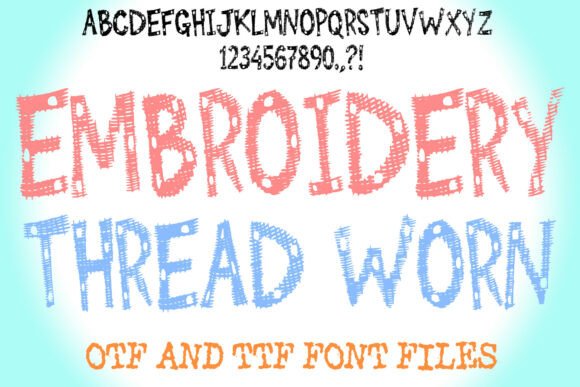
As an embroidery designer who’s stitched over 3,000 personalized gifts—from newborn onesies to heirloom wedding towels—I felt an instant warmth the first time I opened Embroidery Thread Worn. It doesn’t shout. It leans in. The font carries that gentle, slightly frayed charm of real hand embroidery: soft edges, subtle texture, and a quiet sense of care. There’s no harsh vector sharpness here—just delicate, organic imperfection that reads as cozy, romantic, and deeply handmade. It’s not flashy or modern in a digital sense; it’s timeless in the way a well-loved linen napkin is timeless. That emotional resonance? That’s what makes Embroidery Thread Worn more than just a decorative font—it’s a storytelling tool.
Where This Font Truly Shines in Real Projects
I’ve tested Embroidery Thread Worn across dozens of actual client orders—and its versatility surprised even me. For baby embroidery, it transforms simple muslin blankets into tender keepsakes: “Lily Rose” stitched across a cloud-soft receiving blanket feels like a lullaby in thread. On wedding gifts, it elevates plain cotton towels into heirlooms—“Forever & Always, 2024” stitched in ivory thread on charcoal linen adds quiet elegance without overwhelming the fabric. Family pillow covers gain instant heart when names like “The Martins” or “Grandma’s Kitchen” appear in this font—its worn texture suggests years of love, not just one afternoon of stitching.
Nursery decor becomes instantly cohesive with Embroidery Thread Worn: a framed canvas reading “Dream Big” or a wooden crib name plaque with embroidered lettering (digitized from the font) feels intentional and warm. For embroidered towels, aprons, and tote bags—especially those made from textured terry, linen-cotton blends, or heavyweight canvas—the font’s inherent “fabric-like” quality helps it settle *into* the surface rather than sit on top of it. And for Etsy sellers and craft fair vendors? This font consistently boosts buyer engagement. Customers linger longer on listings using Embroidery Thread Worn in mockups—they see craftsmanship, not just customization.
Practical Notes Every Embroiderer Should Know
Let’s be honest: beauty requires intention. Embroidery Thread Worn is a display font—not meant for tiny monograms or dense text blocks. Its charm lives in medium-to-large sizes (think 1.5–3 inches tall for most home decor items). When working with small lettering—like initials on a baby bib or a date on a coaster—I recommend testing stitch-outs first. Delicate curves and thin connecting strokes can blur on stretchy knits or loosely woven fabrics unless stabilized properly.
Fabric texture matters. On thick fleece blankets or quilted pillow covers, use a firm cutaway stabilizer to support the font’s layered look and prevent puckering. For dark fabrics, choose high-contrast thread colors (cream on navy, heather gray on burgundy)—the worn texture shines best when the eye can read the subtle variation in stitch density. With lightweight or delicate materials—like bamboo baby onesies—opt for lightweight tear-away stabilizer and reduce stitch density slightly to preserve drape and comfort.
Why Customers Trust What They Can *Feel*
In handmade gifting, perceived quality isn’t just about thread count or hoop precision—it’s about emotional authenticity. When a customer sees Embroidery Thread Worn on your product photo, their brain registers “handmade,” “thoughtful,” “one-of-a-kind”—even before they read the description. That subconscious cue builds trust faster than any bullet point. I’ve watched Etsy shop owners report higher conversion rates and warmer reviews (“It looks like my grandma stitched it!”) when using fonts like Embroidery Thread Worn in their custom embroidery offerings.
For digital product sellers creating printable mockups, this font adds instant credibility. A mockup of a nursery pillow using Embroidery Thread Worn feels more realistic and inviting than generic sans-serif—making customers imagine the finished product more vividly. And for commercial embroidery projects sold through local boutiques or bridal shops? The font’s romantic, tactile aesthetic aligns beautifully with premium branding—helping your small shop product stand out among mass-produced alternatives.
Your Stitch-Out Checklist Before Finalizing
- Create a test stitch-out on the exact fabric you’ll use—not just scrap cotton.
- Check small details after stitching: verify legibility of fine strokes, especially in lowercase letters and punctuation.
- Compare thread colors side-by-side on your fabric under natural light—some textures mute contrast unexpectedly.
- Confirm hoop size compatibility with your machine and design dimensions—this font often works best in 5x7" or larger hoops for optimal detail.
- Review stitch density in your embroidery software—if it feels overly heavy for your fabric, adjust underlay or reduce density slightly.
- Use proper stabilizer based on fabric weight and stretch; don’t skip this step—even experienced stitchers get caught off guard by delicate flourishes.
- Always review product details and licensing on Creative Fabrica before selling finished products—Embroidery Thread Worn is a decorative font, and its usage rights for commercial embroidery depend on the specific license purchased.
More Than a Font—A Finishing Touch with Feeling
Embroidery Thread Worn doesn’t just spell words—it carries tone, tenderness, and tradition. Whether you’re stitching a holiday keepsake for a longtime client, designing a launch collection for your Etsy shop, or crafting personalized baby products for a boutique, this font quietly elevates every project. It reminds us that in handmade gifting, the smallest details—the frayed edge of a thread, the softened curve of a letter—often hold the deepest meaning. Choose it not just for how it looks, but for how it makes people feel when they hold your finished product in their hands.